
Why Getting Roasted by AI Is Actually Useful (And Surprisingly Accurate)
· LookMood AI
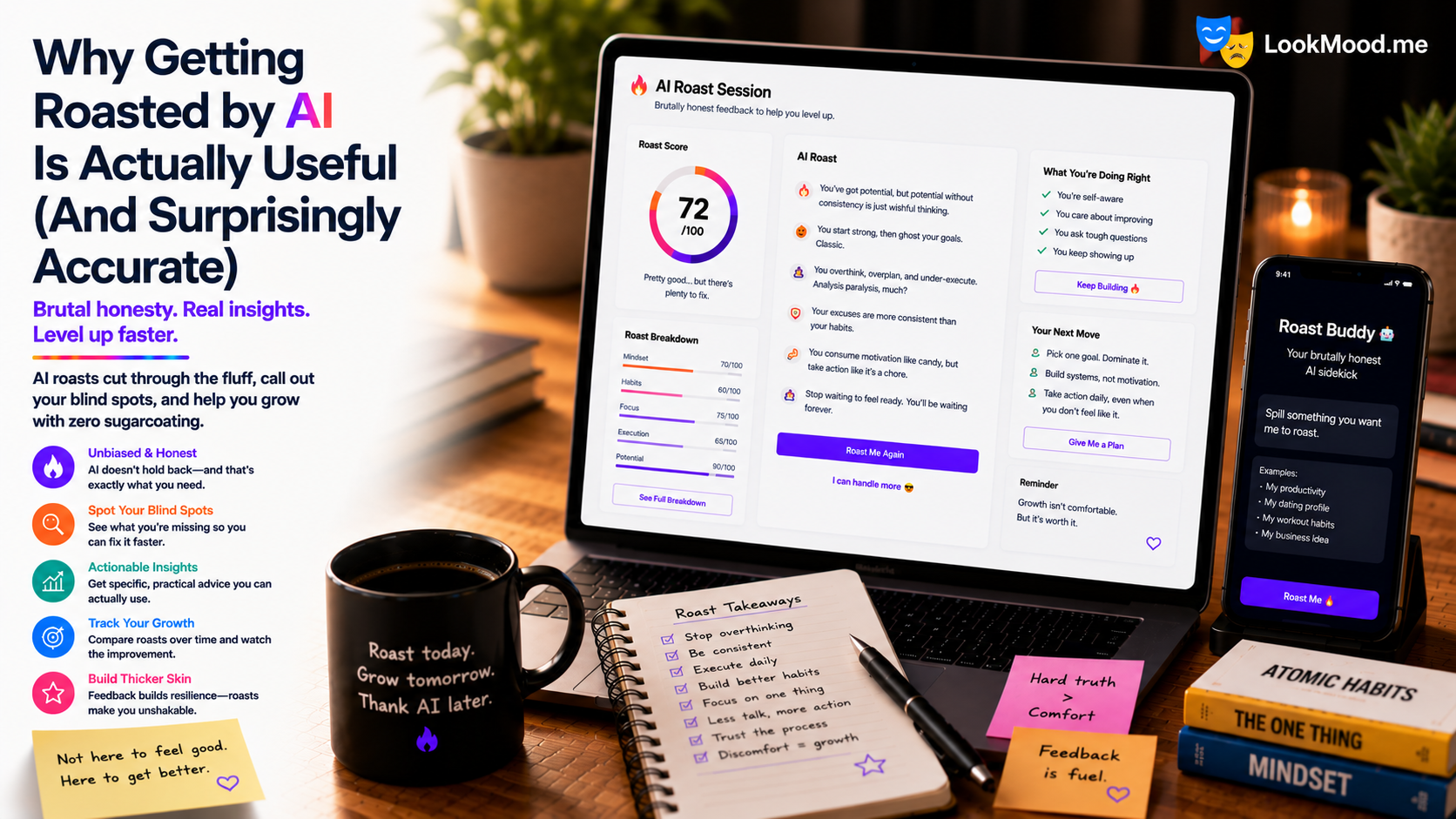
A roast, done right, is one of the more honest things you'll experience. It cuts through the framing everyone politely maintains around you and goes straight to the observations people have had but haven't said. The best roasts are the ones where you're laughing and also slightly embarrassed because the thing that got said is actually true.
AI roasting is the same mechanism, available on demand, without requiring you to sit in front of a crowd or ask a friend to be mean to you. And it turns out to be oddly accurate.
Why roasting has actual utility
Most feedback you receive is filtered. Your colleagues stay professional. Your friends are loyal. Your family is biased. The result is that most people have a reasonably positive but not particularly accurate view of how they come across.
A roast has different social permission — it's allowed to say the thing. The embarrassing habit. The professional quirk that's become a kind of personal brand. The way you tell stories that always includes three too many setup details. The fact that you've mentioned the same life goal for six years without doing anything about it.
These are the observations that accumulate in the people who know you well and almost never get said directly. A good roast says them, with enough humor that they land without destroying you.
A worked example
Here's a specific prompt for LookMood AI's roast feature:
"Roast me based on this description: I'm a 32-year-old product manager who is very into productivity systems. I've tried four different to-do apps in the past year. I read a lot of books about habits but my apartment is a mess. I say 'let's circle back on that' in every meeting. I told my friends I was going to start running six months ago and I have not started running."
A good roast takes these details and builds observations that are specific, accurate, and genuinely funny rather than generic insults. It might note that your productivity system has become a productivity project — you've optimized the optimization process without actually doing anything. It will definitely address the running. It won't miss the "circle back" habit or what it implies about how you end meetings to avoid commitment.
The roast is most accurate when you give it specific, honest material. Vague input produces generic output. The more specific you are about the things you suspect are roastable, the more on-the-nose the result tends to be.
What makes it actually useful (beyond entertainment)
The useful part isn't the jokes. It's that you can't be defensive about a roast in the same way you can be defensive about direct feedback. When something is framed as comedy, your guard comes down enough to actually hear it.
Most people who go through the AI roast come out with at least one accurate observation they hadn't consciously acknowledged. The procrastination pattern. The conversational habit that's become a cliche. The gap between how they describe themselves and what they actually do. Hearing it framed as a joke makes it land without the defensiveness that would block direct feedback from doing the same job.
You don't have to do anything with a roast. But the observations tend to stick.
For a different kind of situation-reading, see how to do a vibe check on any situation using AI — a more analytical take on reading what's happening around you. And if the roast revealed something about your writing habits, how to fix your writing with AI is a practical next step.