
How to Find Cheap Flights With AI in 2026
· LookMood AI
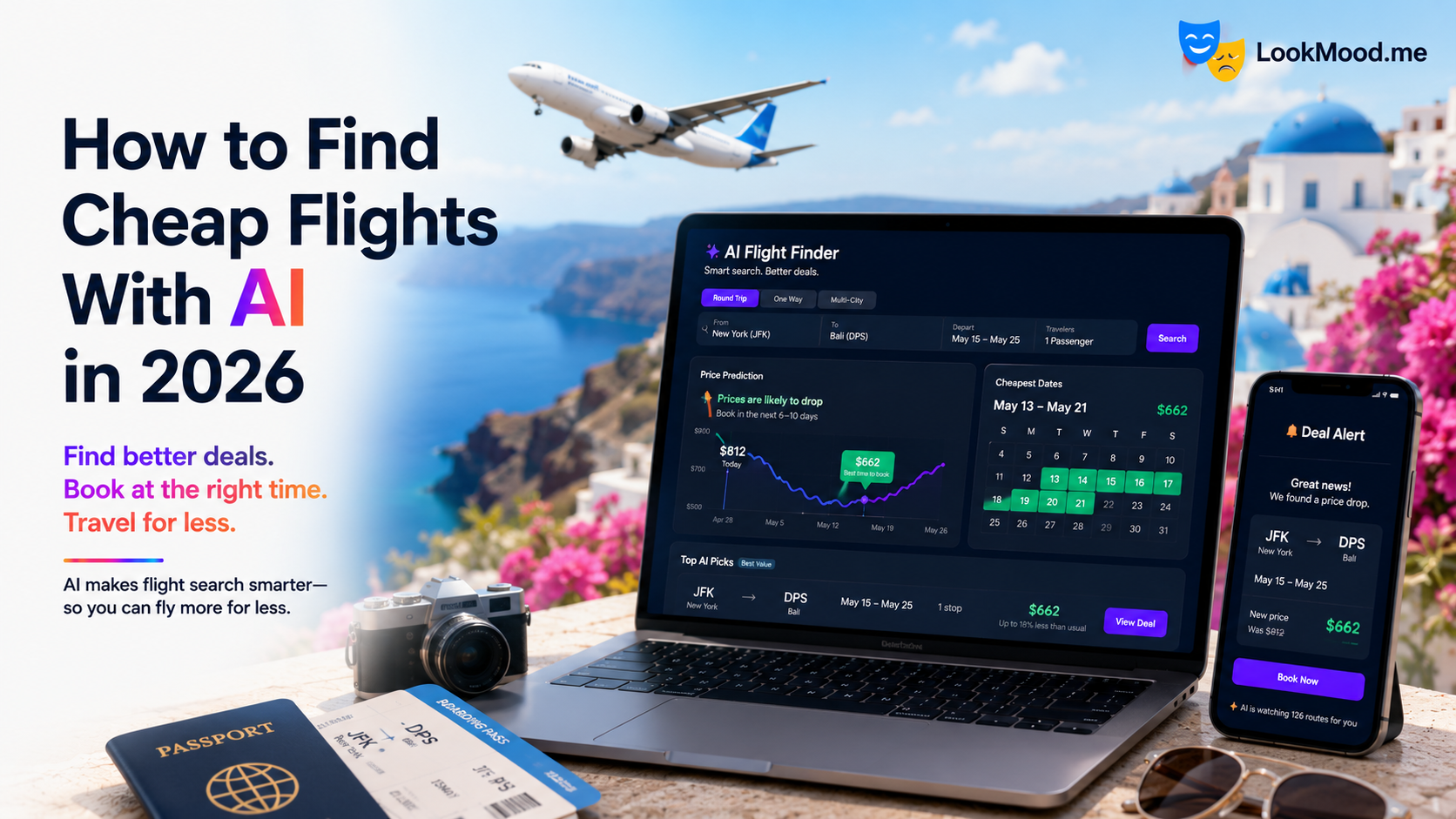
You spent forty minutes on Google Flights yesterday. You checked Tuesday versus Wednesday. You switched the departure airport. You tried incognito mode. You're still not sure you found the best fare.
This is the flight search loop most people are stuck in. It feels productive — you're comparing, you're checking — but it's mostly noise. The variables that actually move flight prices are things most price-comparison tools don't surface clearly, and the optimal booking window depends on the route and season in ways that aren't obvious. AI compresses the research part significantly.
What actually moves flight prices
Flight pricing is dynamic — airlines adjust fares based on demand, booking window, remaining seat inventory, and competitor pricing. There are a few things that consistently matter:
- Booking window. For long-haul international flights, the sweet spot is typically 2–6 months out. Domestic routes are often cheaper 3–6 weeks out. Too early or too late both cost you.
- Day of travel. Tuesday and Wednesday departures are typically cheaper than Friday and Sunday. This varies by route but is a reliable general pattern.
- Nearby airports. Flying into a secondary airport 30–60 miles from your destination can cut costs significantly, depending on what ground transport costs to cover the difference.
- Route structure. One stop is often cheaper than direct. Two stops is rarely worth the saving unless the price difference is large and the layover is reasonable.
Knowing these patterns doesn't mean you can predict the best fare — it means you're asking better questions when you research.
A worked example
Here's a specific prompt for LookMood AI's flight finder:
"I want to fly from New York (either JFK or Newark) to Tokyo in late November, returning mid-December. Budget is around $900 round trip. What airlines typically offer the best fares on this route, what booking window am I in, and are there any routing tricks that might help me get under budget?"
A good response gives you the airlines most competitive on that route (for New York to Tokyo: typically ANA, JAL, and Korean Air via Seoul), the current booking window assessment (late November departures from the US in October are still within the optimal window), and the specific routing to check — flying into Narita versus Haneda can affect price and ground transport time differently. It also flags whether your target price is realistic for the season or whether you should add flexibility to your dates.
From there: "I can leave up to three days earlier or later — which dates tend to be cheapest on that route?" Flexibility is the single biggest lever in flight pricing, and AI helps you use it efficiently.
When to book and when to wait
The "should I book now or wait?" question has a real answer — it just depends on the route. AI can give you a useful directional read: for this route, at this booking window, with this level of demand, is the fare you're seeing likely to drop or rise?
The general rule: if you're within three weeks of departure and haven't booked, prices are almost certainly going up, not down. If you're 3–5 months out and fares look reasonable for the route, book. Trying to time the market on flights is a low-return game.
One thing AI does particularly well here is reality-checking your expectations. If you want to fly business class to Southeast Asia for $500, the AI will tell you that's not happening and what that ticket actually costs — saving you the three hours you'd spend refreshing search pages hoping for a miracle.
Once you have a flight sorted, the accommodation decision is next. See how to find the best hotel for your budget using AI to cut through the review noise. And if you haven't decided where you're going yet, how to plan a trip with AI covers the full destination and itinerary side.