
Why We Love Filters — The Emotional Science Behind Digital Self-Expression
· LookMood Team
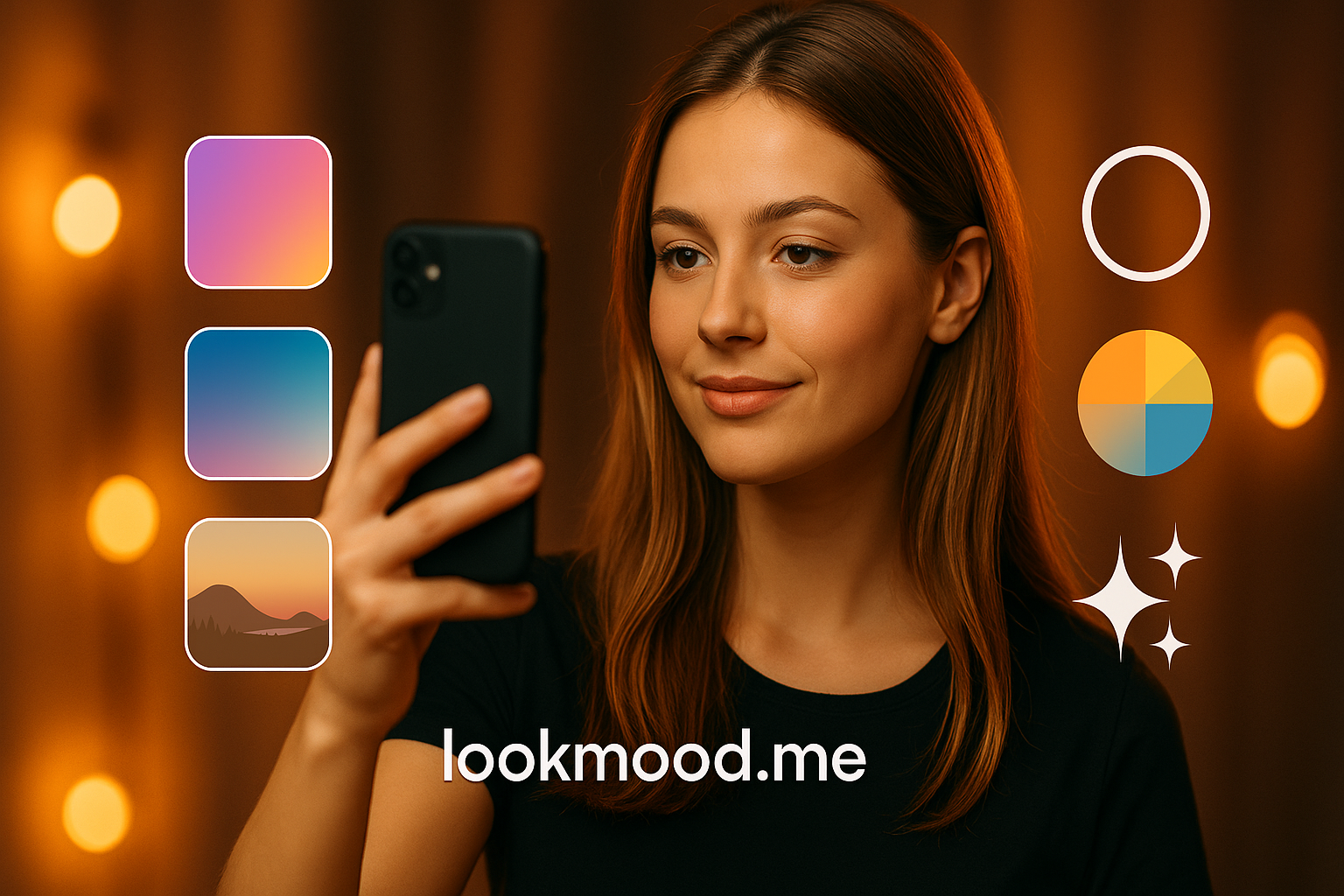
Filters are everywhere — in selfies, reels, video calls, and even professional photos. They smooth, soften, brighten, and reshape. But the real reason we use them isn’t cosmetic. It’s emotional. Filters help us project a version of ourselves that feels aligned with how we want to be seen in that moment.
“Filters aren’t about hiding flaws — they’re about expressing a mood, a feeling, or an identity we’re exploring.”
1. Filters help us match how we feel on the inside
Your face doesn’t always reflect your internal world. You might feel energized but look tired. You might feel soft and dreamy but appear sharp and tense. Filters act like emotional translators — tools that bring your visual expression closer to your inner state.
- Warm filters convey comfort, nostalgia, or calm.
- Cool filters signal focus, clarity, or detachment.
- High-contrast looks suggest confidence or intensity.
When the outer image aligns with the inner feeling, something clicks. That alignment is emotionally satisfying — and that’s why filters stick.
2. Filters give us emotional control in a chaotic world
Life is unpredictable. Lighting, timing, mood, environments — nothing is consistent. Filters offer a sense of control in that chaos. They let you decide how you’ll be perceived, even when everything else feels messy.
That control isn’t vanity — it’s regulation.
- A smoothing filter calms visual noise, giving the brain a moment of relief.
- A dreamy glow softens emotional edges.
- A bold color shift creates confidence where there was hesitation.
Humans have always curated their appearance — filters simply modernize that instinct.
3. Filters help us experiment with identity — safely
Who am I today? Who do I want to be? Filters give people a way to try on different identities without commitment. It’s like emotional fashion.
- Soft aesthetic? You explore gentle, introspective energy.
- Bright, saturated colors? You express playfulness or extroversion.
- Monochrome? You signal moodiness, calm, or depth.
These aren’t distortions. They are explorations. And in a world where identity is fluid, filters feel like freedom.
4. The psychology of “enhancement” — why it feels good
Studies in visual psychology show that humans are drawn to images with balanced lighting, smoother gradients, and softer contrast. These cues signal health, warmth, and safety. Filters amplify exactly those traits.
That’s why enhanced images feel naturally pleasing:
- Smoother skin tones reduce visual stress.
- Even lighting mimics the golden-hour effect our eyes love.
- Balanced highlights make faces more readable and expressive.
Your brain isn’t fooled — it’s soothed. The result is a small emotional reward that keeps you coming back.
5. Filters aren’t fake — they’re emotional editing
Critics often say filters create unrealistic standards. But the deeper truth is simpler: filters aren’t about realism at all. They’re about storytelling. They help us communicate how we feel, who we are today, and what emotional tone we want to carry into the world.
The danger isn’t filters themselves — it’s forgetting that they’re tools, not definitions. Used with awareness, they are a form of creativity, not distortion.
When emotional tech elevates authenticity
Tools like LookMood bring a new layer to this story. Instead of only enhancing the image, LookMood reads the emotional energy behind it — the micro-expressions, the tone, the mood patterns. That’s real, raw emotional data. And it helps people understand the truth underneath their curated layers.
Filters help you express your intention. Emotion tech helps you understand your reality. Together, they create a fuller picture of who you are.
We don’t love filters because they hide us — we love them because they reveal a version of us we’re exploring, growing into, or feeling in the moment. And when you combine that with emotional awareness, every photo becomes more than an image — it becomes a chapter of your inner world.