
The Psychology of Your Selfie — What Your Face Reveals About Mood, Energy & Personality
· LookMood Team
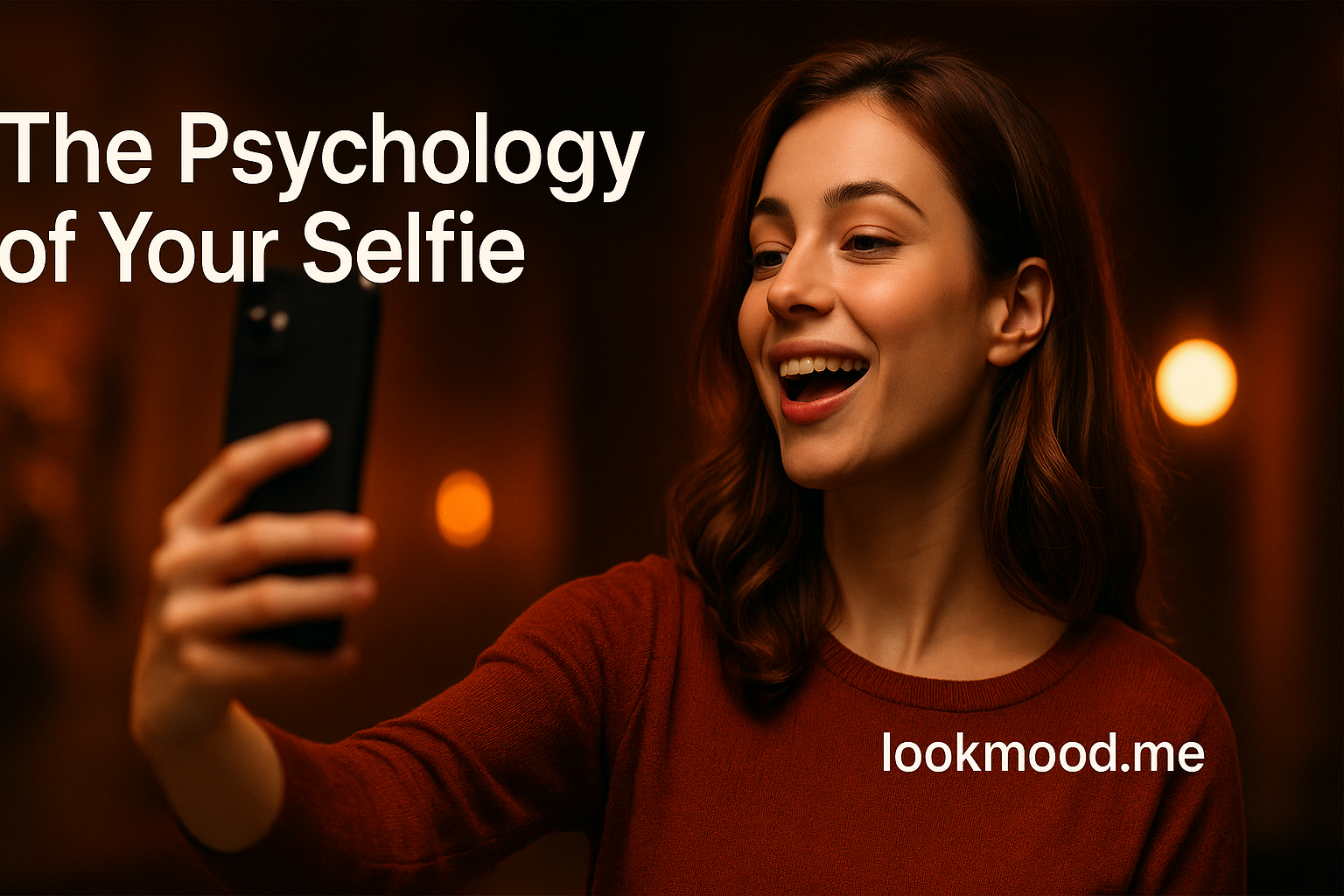
Every selfie you take captures more than lighting, filters, or angles. It freezes micro-expressions — tiny emotional signatures written across your face. These signals form a quiet language your brain understands instantly, even if you’re not consciously aware of it. That’s why a single photo can feel “off” or strangely accurate. Your face is always telling a story.
“Your face is a live dashboard of emotion, energy, and intention — every selfie is a snapshot of your internal weather.”
1. Your face reveals mood before you even name it
Before you say “I’m fine” or “I’m tired,” your muscles have already announced the truth. Psychologists call these micro-expressions — quick, involuntary movements that reflect your real emotional state. They’re universal, hard to suppress, and surprisingly accurate.
- Raised inner brows: subtle sign of sadness or emotional weight.
- Tightened lips: frustration, restraint, or quiet stress.
- Soft cheeks + relaxed eyes: calm, balance, peace.
- Half-smile (one side): confidence or controlled amusement.
Your selfie isn’t posing — it’s reporting. Even when you try to hide an emotion, your facial muscles leak the truth for a fraction of a second.
2. The energy behind your face matters more than the expression
People assume mood equals expression, but emotion actually starts asenergy. Some days your face carries a lift — higher muscle tone, alert eyes, sharper focus. Other days it softens — slower blinking, gentler posture, looser muscles.
These energy signatures tell a deeper story:
- High energy + tension: stress, urgency, pressure.
- High energy + openness: creativity, momentum, drive.
- Low energy + heaviness: emotional fatigue.
- Low energy + softness: reflection, rest, clarity.
Mood isn’t just an emotion — it’s an energy pattern your face quietly broadcasts.
3. Why you look different in every selfie
You’ve probably noticed you don’t look the same in every photo — even on the same day. That’s not randomness. Your face shifts with your internal state. Small changes in breath, focus, or emotion alter your appearance more than lighting or filters.
Here are the hidden variables:
- Mental load: thinking hard tightens jaw muscles and narrows eyes.
- Social pressure: “camera face” forces a controlled, inauthentic expression.
- Authenticity: when you forget you’re being watched, your real mood shows up.
- Self-focus: hyper-awareness can amplify tension and distort expression.
When your selfie “doesn’t look like you,” it usually means the emotion behind the lens didn’t match the story you were trying to project.
4. The science of facial symmetry isn’t what you think
Many people assume symmetry equals beauty, but psychology tells a more interesting story. Symmetry can hint at stability, but small asymmetries often reveal personality, emotional nuance, and authenticity.
- Asymmetric smiles often signal real amusement, not a posed smile.
- Uneven eyes can reflect curiosity, concentration, or emotional depth.
- Subtle head tilt shows openness, warmth, or genuine engagement.
Perfection doesn’t look human. What people connect with in your face is the emotion behind the details.
5. How AI reads your face — and why it works
Emotion AI tools like LookMood don’t just detect “happy” or “sad.” They study patterns your brain already understands: tension vs. relaxation, symmetry vs. imbalance, activation vs. softness.
That’s why mood detection feels surprisingly accurate. The system reads what your nervous system has been mapping your whole life — tiny changes in your face that match emotional states.
The camera isn’t judging you. It’s translating signals you already send without realizing.
6. What your selfie says about personality
While one photo can’t define who you are, consistent expression patterns can hint at personality traits. Researchers call this facial behavior baselining — the idea that your “neutral” expression holds clues to your emotional habits.
- Soft baseline: empathetic, reflective, emotionally tuned-in.
- High-tone baseline: driven, focused, assertive.
- Variable baseline: expressive, creative, sensitive to emotional shifts.
You’re not locked into these traits — they simply describe your default emotional lens.
When technology meets self-awareness
A selfie can be a window into your emotional world — but technology makes the window clearer. LookMood’s Core OS uses advanced AI to read micro-expressions and energy signals, offering a mirror for feelings you may not have words for yet.
It’s not about perfection or performance. It’s about reflection — a way to understand yourself with more honesty and less pressure.
Your face is a living story — shaped by emotion, energy, memory, and personality. Every selfie captures a chapter. When you learn to read those tiny details, you don’t just take better photos — you understand yourself in a deeper, more human way.