
Why Singing on Camera Feels Scary — and Why People Do It Anyway
· LookMood Team
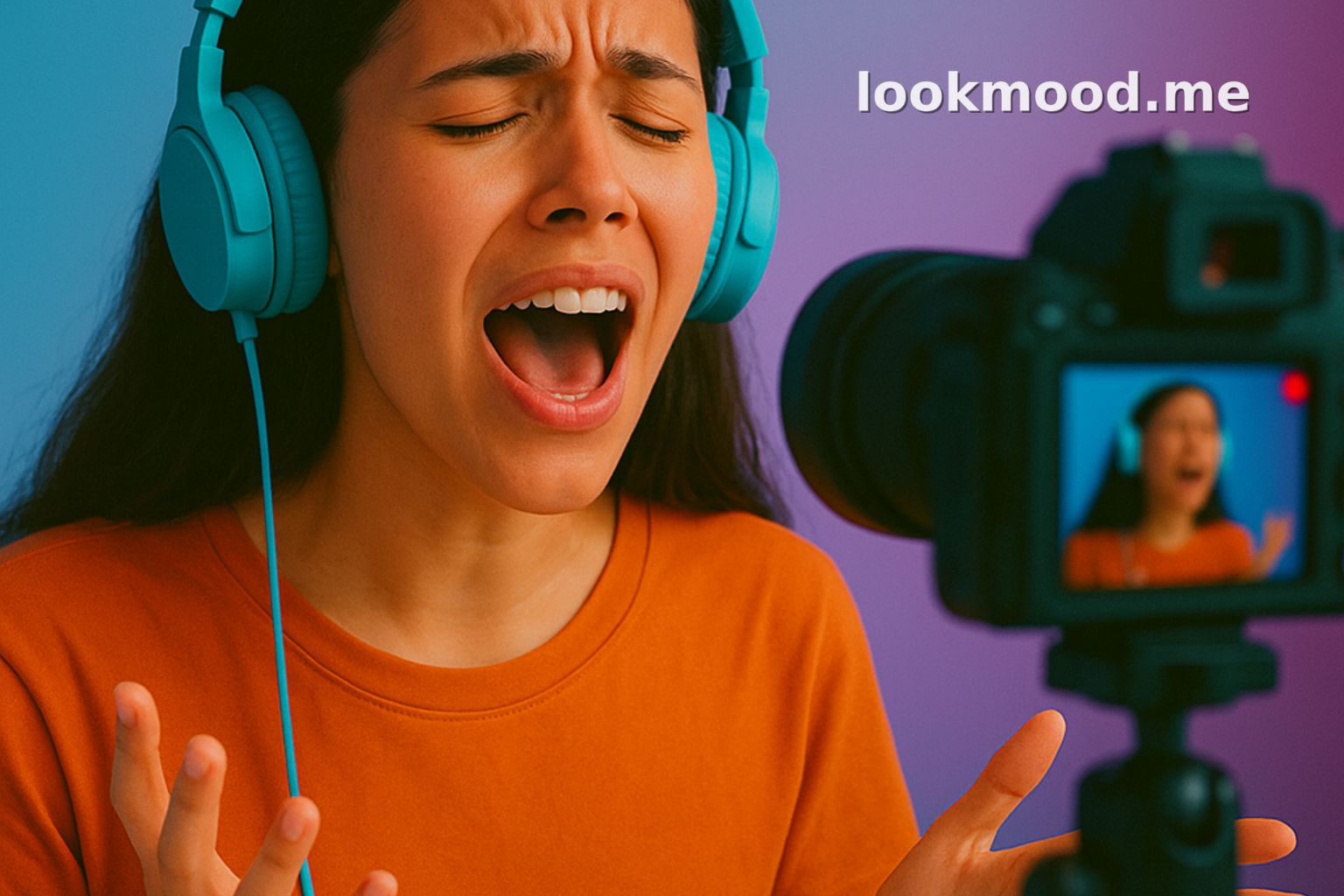
The red light blinks on. Your throat tightens. Suddenly, the simple act of singing— something you’ve done in the shower a hundred times—feels like a test of courage. Why? Because the camera changes the equation. It adds the silent question: “Who will see this version of me?”
The moment you press record, your voice isn’t just about pitch or tone—it becomes a mirror of how safe you feel being seen.
Fear of judgment hides inside self-awareness
Performance anxiety isn’t really about skill; it’s about self-image. Our brains evolved to equate visibility with vulnerability. To be seen is to be evaluated. The camera simulates an audience—even when no one’s there—and your nervous system reacts as if it’s facing a crowd.
- Voice tension: adrenaline makes breath shallow, tightening your range.
- Mind clutter: you start editing yourself mid-phrase, breaking flow.
- Freeze response: perfectionism floods in, replacing playfulness with control.
Creators overcome it by shifting focus
The best singers on social media don’t eliminate fear—they redirect it. Instead of asking, “How do I sound?” they ask, “What am I sharing?” Purpose dissolves self-consciousness. Authenticity becomes technique.
- Rehearse expression, not control: record short, emotional takes instead of chasing flawless runs.
- Desensitize gently: post small clips privately first—let your nervous system learn safety through repetition.
- Reframe feedback: comments are data, not verdicts. Use them to adjust, not self-define.
Confidence isn’t the absence of nerves—it’s proof that you’ve learned to perform while feeling them.
Technology is amplifying vulnerability—and connection
Platforms like TikTok and LookMood’s Singing Coach don’t just measure pitch; they normalize imperfection. Every take is a version of truth. As tools evolve, self-expression becomes less about “flawless” output and more about emotional frequency— the feeling behind the sound.
That’s why audiences respond more to emotion than accuracy. The digital stage rewards resonance, not range. The singers who thrive are the ones who let their humanness through the mic.
Try it yourself
Next time you sing into your phone, close your eyes for the first 10 seconds. Forget the camera. Feel your breath. When you open them, you’ll notice something different—your reflection looks less like a critic and more like an ally.
The fear never fully goes away. But once you see that it’s part of the art, not a barrier to it, you start to sing—not to impress, but to express. That’s where freedom lives.