
Selfie Mood Analyzer: The Complete 2025 Guide to AI Mood Analysis
· LookMood Team
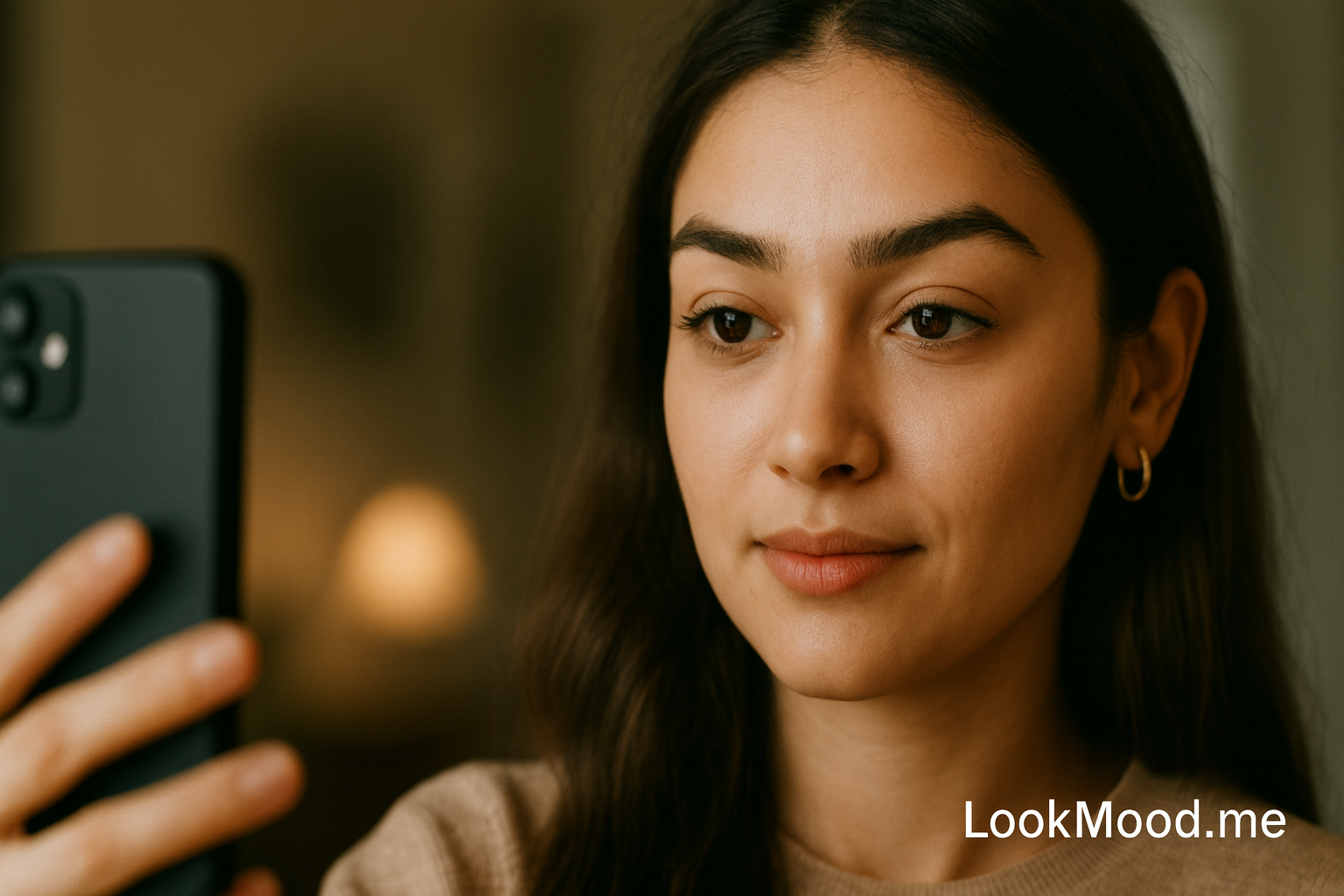
The rise of selfie mood analyzers
In 2025, people are searching for more than filters. They want feedback. A selfie mood analyzer turns your camera into a quick mood check, reading subtle cues and giving you a private scorecard. This guide explains what it is, why video is more accurate than a single photo, and how you can use LookMood to try it instantly.
What is a selfie mood analyzer?
A selfie mood analyzer is an AI tool that estimates your emotional state from a selfie or short selfie video. It measures landmarks on your face, micro-expressions, and natural movements, then outputs a named mood and percentage breakdown.
How AI mood analysis works
- Detects facial landmarks such as eyes, brows, lips, and jawline.
- Measures micro-expressions that reveal tension or relaxation.
- Averages signals across frames for stability when using video.
- Outputs a mood scorecard with a final named mood.
Photo vs. video: which is better?
Photo-only analysis is quick but fragile. Lighting, angle, or a forced smile can distort the result. Short selfie video is more accurate because it captures natural micro-movements over time, balancing out small variations. That is why LookMood is designed as a video-first tool.
Accuracy checklist
- Use soft, even lighting (natural daylight works best).
- Keep your full face visible at eye level.
- Record 3–6 seconds breathing normally without posing.
- Avoid heavy filters that change facial geometry.
- Hold the phone steady to capture expressions, not shake.
Real-world use cases
- Creators: vibe check before going live or posting.
- Students and professionals: quick confidence boost before an interview.
- Wellness: lightweight daily check-in without journaling.
- Entertainment: share mood results with friends for fun.
Common mistakes that reduce accuracy
- Backlit windows creating silhouette faces.
- Harsh overhead lights casting strong shadows.
- Recording less than 2 seconds.
- Looking at the screen instead of the lens.
- Exaggerated posing or forced expressions.
Step-by-step: try it on LookMood
- Open the AI Selfie Studio on LookMood.
- Tap record (or upload a short clip).
- Hold for 3–6 seconds with natural expression.
- Receive your mood and scorecard in seconds.
Try it yourself today: Selfie Mood Analyzer
Privacy and control
LookMood is private-first. Nothing is shared unless you choose to. Save results, delete them anytime, or keep them for your own history. Mood analysis is for self-awareness and fun, not medical use.
The future of mood-aware AI
- Mood-adaptive filters that match your vibe in real time.
- Cross-modal analysis combining face and voice.
- Mood journaling to track energy patterns across weeks and months.
FAQ
Is a selfie mood analyzer medical?
No. It is an AI estimate designed for awareness and creativity, not diagnosis.
Can I use just a photo?
Yes, but results are more variable. For reliable accuracy, use a short selfie video.
Does lighting matter?
Yes. Soft, even light can improve accuracy dramatically. Harsh or uneven light may mimic expressions.
Who sees my results?
Only you—unless you share. LookMood is built with privacy control at its core.
Bottom line
A selfie mood analyzer is a fun but powerful tool. With LookMood’s video-first design, you get a fast, private read on your vibe and a scorecard you can use for reflection, confidence, or content. It is more than a filter—it is feedback you can trust.